 Blow FlyBlow Fly
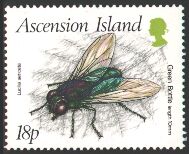
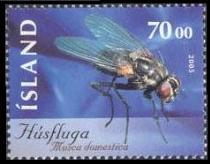
| Ascension Island 1989 | Iceland 2005 | Bhutan 1997 |
 |
 |
 |
|---|---|---|
| Sheep Maggot Fly Lucilia sericata (Calliphoridae) |
House Fly Musca domestica (Muscidae) |
Flesh Fly Sarcophaga haemorrhoidalis (Sarcophagidae) |
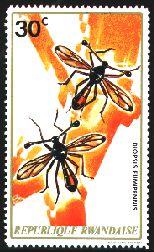
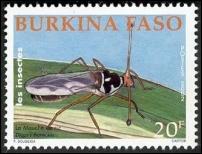
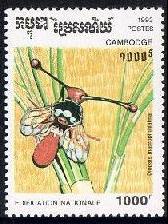
| Rwanda 1973 | Burkina Faso 2002 | Cambodia 1993 |
 |
 |
 |
|---|---|---|
| Stalk-eyed Fly Diopsis fumipennis (Diopsidae) |
Stalk-eyed Fly Diopsis thoracica (Diopsidae) |
Telescope Fly Diopsis macrophthlalma (Diopsidae) |
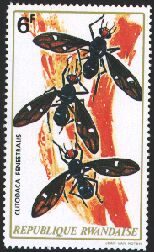
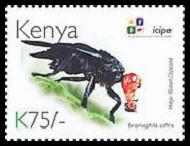
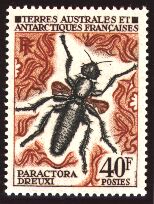
| Rwanda 1973 | Kenya 2011 | French Antarctics 1971 |
 |
 |
 |
|---|---|---|
| Signal Fly Clitodoca fenestralis (Platystomatidae) |
Red-headed Fly Bromophila caffra (Platystomatidae) |
Sub-Antarctic Kelp Fly Paractora dreuxi (Dryomyzidae) |
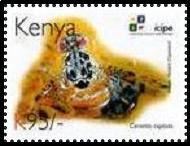
| Kenya 2011 | Kenya 2011 | Kenya 2011 | Kenya 2011 |
 |
 |
 |
 |
|---|---|---|---|
| Coffee Fruit Fly Trirhithrum coffeae (Tephritidae) |
Fruit Fly Carpophthoromyia dimidiata (Tephritidae) |
Fruit Fly Celidodacus obnubilus (Tephritidae) |
Mediterranean Fruit Fly Ceratitis capitata (Tephritidae) |
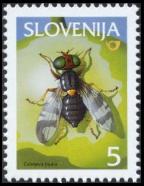
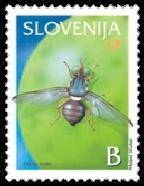
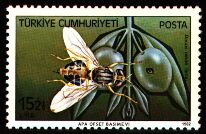
| Slovenia 2000 | Slovenia 2003 | Turkey 1982 | Solomon Islands 1991 | Cape Verde 1988 |
 |
 |
 |
 |
 |
|---|---|---|---|---|
| European Cherry Fly Rhagoletis cerasi (Tephritidae) |
Olive Fruit Fly Bactrocera oleae (Tephritidae) |
Olive Fruit Fly Bactrocera oleae (Tephritidae) |
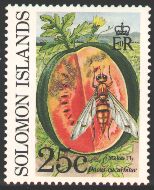
Melon Fly Dacus cucurbitae (Tephritidae) |
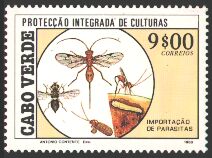
Fruit Fly (Left) Tephriti tephriti (Tephritidae) |
| Kenya 2011 | Kenya 2011 | Kenya 2011 | Kenya 2011 |
 |
 |
 |
 |
|---|---|---|---|
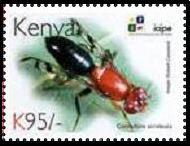
| Rubiaceae Fruit Fly Conradtina acroleuca (Tephritidae) |
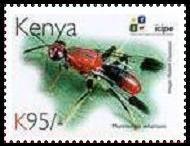
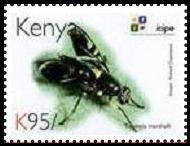
Fruit Fly Munromyia whartoni (Tephritidae) |
Dracaena Fruit Fly Taomyia marshalli (Tephritidae) |
Capparaceae Fruit Fly Themarictera laticeps (Tephritidae) |
| Kenya 2011 | Kenya 2011 |
 |
 |
|---|---|
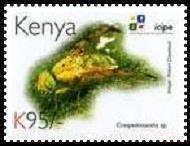
| Fruit Fly Craspedoxantha sp. (Tephritidae) |
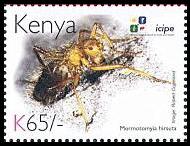
Terrible Hairy Fly Mormotomyia hirsuta (Mormotomyiidae) |
| Australia 2014 ALUMINUM BRONZE |
 |
|---|
| Australian Sheep Blow Fly Lucilia cuprina (Calliphoridae) |
 |
 |
|---|---|
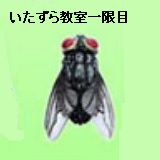
| Green House Fly Neomya timorenmsis (Muscidae) (DIPTERA) |
House Fly Musca domestica (Muscidae) (DIPTERA) |
A fly is an insect with the most remarkable specialization of a form. The number of wings is two and they have only a front wing. A back wing degenerates and has become very small average stick. Although flying capability is various, there are many kinds which fly very skillfully. In order to gather for the body of food and an animal, excrement, etc., while a fly carries a disease germ, a pathogenic organ, etc., in order that a larva may make it food, it is carrying out the big work as a cleaning person.
 NEXT
NEXT
 to Stamp
 to HomePage