Mar.6, 1998
--- A moorhen climing a tree ---
�@I went for a walk along the lakeside of BIWA-LAKE near my home. About 2 kilometers from Mano to Honkatata in Otsu-city, Shiga. The weather was fine.
Little Egret (3), Common Cormorant (20 or more), Little Grebe (10), Great Crested Grebe (5),
Mallard (5), Green-winged Tiel (30), Grey Duck (2), Eurasian Wigeon (50 or more),
Falcated Duck (4), Gadwall (4), European Pochard (2), Tufted Duck (7), Moorhen (7),
Black-headed Gull (100 or more), Common Sandpiper (1), Black-eared Kite (many),
Common Kingfisher (1), Japanese Pied Wagtail (1), White Wagtail (5), Bull-headed Shrike (3),
Barn Swallow (5), Reed Bunting (10 or more), Oriental Green Finch (many), Tree Sparrow (many),
Domestic Pigeon (10 or more), Eastern Turtle Dove (2), Crrion Crow (4), Dusky Thrush (3),
Grey Starling (many), Brown-eared Bulbul (3)
Common Cormorant
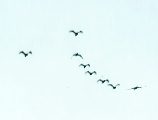 | Although usually not so many appears around here, today they are conspicuous. And they are not staying, but travelling from plate to place. I wonder if they escaped from Chikubu Island where a few days ago Common Cormorants increasing to too many were forced out. I hear they gives significant damage to ayu (sweet fish). I do not know what investigation reached such a countermeasure. I think the fact one species are increasing abnormally should be regarded as a problem in an ecological system as a whole. |
Moorhen
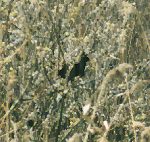 | A bird crawling about on a tree. That is a Grey Starling??? But it looks strange. It is walking with unsteady steps. The bird is swinging everywhen the wind blows. I recognized its red beak. Eu!? It is a moorhen. Staggering on the tree, the moorhen is eating yellow flowers thereon. At that time a gale blew it down. The moorhen flapped and fell down into the lake. I always see moorhens in this area, but this is the first tree-climing moorhen I have ever seen. The water level of BIWA-LAKE is too high? Or they often climb a tree but I have never seen them doing? Or the yellow flow was so sweet? |
Eurasian Wigeon
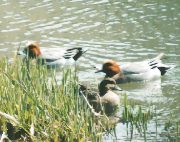 | About 20 Eurasian Wegions are in the MANO-RIVER. They have had a good appetite to prepare for migration? Or the water level of BIWA-LAKE is too high for them to find food there? |
Black-headed Gull
 | Black-headed Gulls in Honkatata take so kindly to men and women. For the neighbors often feed them. Whenever they find a man or a woman, they come to him or her as if they say "Give me something!" Setting aside the problems in feeding to wild birds, the sight a parent or a grandparent and his or her child or groundchild about 3 years old were amusing themselves by feeding the birds made us smile. |
Gadwall
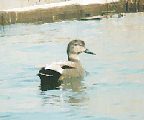 | They have come conspicuous. I have not found them till now? I imagine they have moved from somewhere to the places where Grey Ducks had lived during winter season and left for rivers or fields. |
Reed Bunting
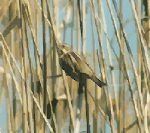 | In the reed field at IMAKATATA, Reed Buntings are busy with finding insects in the dead reed. I never get tired of looking at this scene. |
| Barn Swallow | Maybe Barn Swallows as winter visitors still stay here. It was in Nov. 3 that Barn Swallows as summer residents left here. However, a few swallows were found on Nov. 25. The number of the birds increased gradually, and reached the maximum, a few dozens at the beginning of this year. They must be winter visitors. I could not find so many today, so most of them maybe started to go back to the northern countries. |